
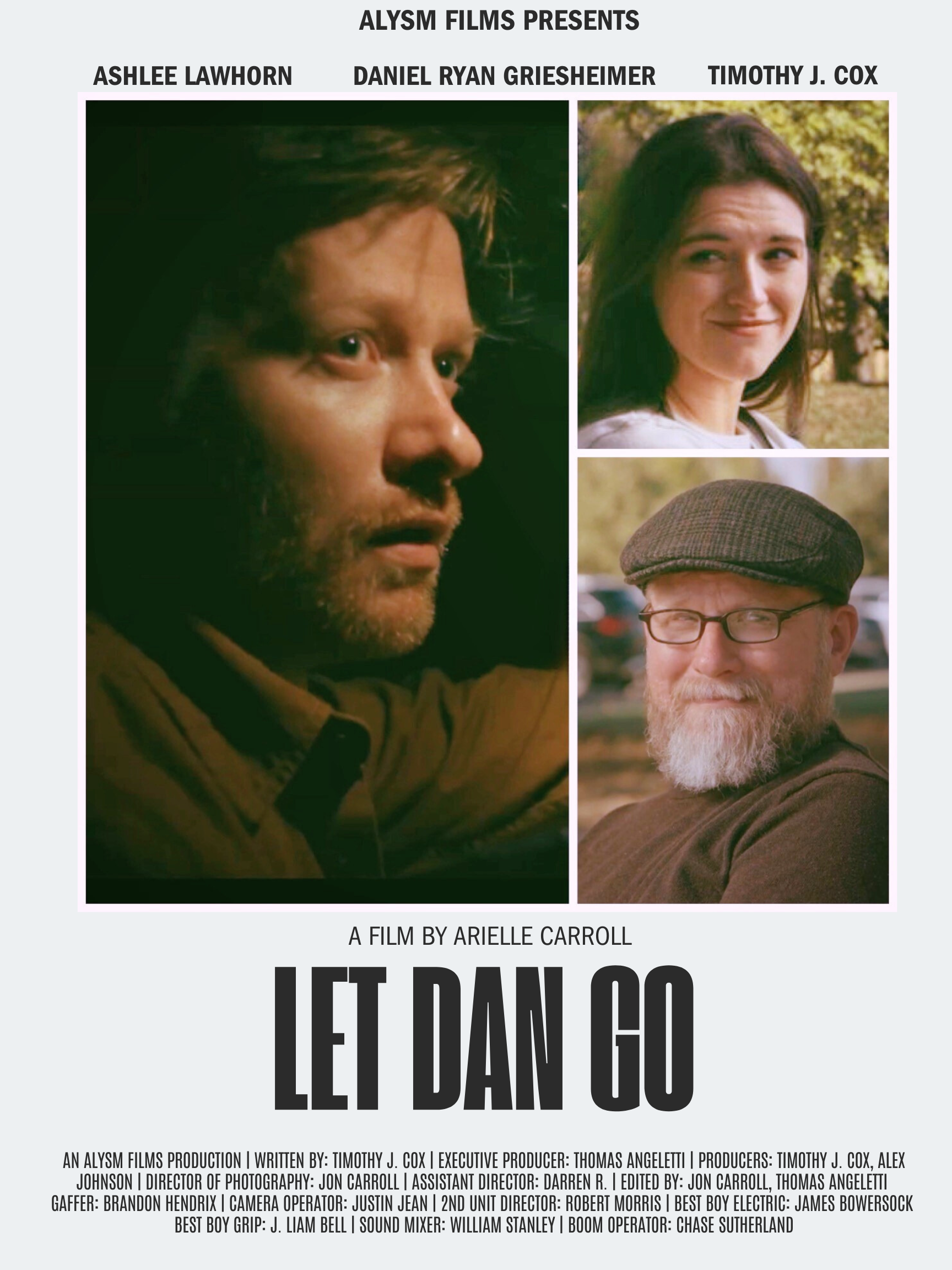
Directed and co-written by Zachary Lapierre, the other scribe on the film was Ian Everhart. Everhart is also cinematographer on the short. Dirty Books is set in a high school. It features a “newsman” reacting angrily at the establishment’s move into the new millennium. Starring Timothy J. Cox as Dr. Bradley the school principal, Ansley Berg and Noah Bailey (as David Burroughs the paper’s publisher and head editor) Dirty Books has a hidden message, or perhaps an uncomfortable truth in its tale of paper versus the Internet.
The story
Dirty Books starts with Bradley telling Burroughs that his paper has been shut down. The school board have determined that it is more cost effective to have an online blog. “Kids pay more attention to their phones,” says Dr. Bradley. In reality the character is not far from wrong.
Burroughs does not take the news well, “How young are you trying to look,” is his acidic response. The young newshound then attempts to motivate his staff to save the paper. Sadly, only David is bothered by the news that their “solid copy” is to be replaced with a blog.
David conspires with Owens (played by director Lapierre). He tells the desperate editor that unless he can make something up that “people can see” the paper cannot be saved. Burroughs takes the advice and begins “making up news.”
Initially, David puts naked pictures taken from “skin trade magazines” into the school’s library books and then writes about it. The views for his paper increase and as his readership goes up, so too do his “pranks.” As the stakes increase, the lines become blurred for Burroughs.
Thoughts
This is a tight little film. Using the real-life biases of “news reporters” as a starting point (David completely dismisses his sports reporter Charlotte, played by Berg, saying that Sports write’s itself) Dirty Books goes on to show that media is an addictive mistress that becomes more about the reporter than the “news” itself.
As usual, Timothy J. Cox adds a stamp of authority and truth to the proceedings and the young cast step up to the mark he sets. The director exhibits a deft touch dealing with millennial teens who, with David at least, want to cling to older values. “Paper versus Internet” is the obvious message with an underlying reality that becomes all too clear by the end of the film.
The movie looks great with clear edits and framing that does not stretch convention and feels “spot on” for the setting and the material. Dirty Books is another FitchFortFilms feature (the first being The Runaround Club) and Lapierre’s first effort in the director’s chair and his second time as an actor.
Despite being set in a high school, the film looks at a number of issues in connection with the “news.” The slow death of the tactile experience of reading the written word caused by the electronic medium of the news blog, integrity in reporting and ethics in the media. Finally, the film addresses the millennial craving for fame, whatever the cost.
Check it out.
This is splendid viewing and an interesting look at the “grass-roots” of journalism. FitchFortFilms takes us to the high school paper where so many writers and journos got their start. Dirty Books is a 4.5 star feature and well worth the time spent watching it.

Leave a Reply
You must be logged in to post a comment.